You saw LCR under a post or in a message, and it looked like a secret code for creators.
It is simpler than that, and this guide makes it clear.
You will learn what each letter asks you to do, why creators ask for it, and when an LCR request helps or hurts.
Quick Answer
LCR = Like, Comment, Repost
L = Like the post. C = Comment on the post. R = Repost, or share, the post. In some private chats, R can also mean Reply, because the “post” is a message that needs an answer.
LCR is a request, not a statement. It only makes sense attached to a post, a video, or a message. A bare “LCR” with no post attached has nothing to like, comment on, or repost, so it reads as confusing, not friendly.
LCR Meaning Table
| Meaning | Where you see it | How to spot it |
|---|---|---|
| Like, Comment, Repost | TikTok, Instagram, Facebook, X, creator chats | Attached to a post or video, asking for engagement |
| Like, Comment, Reply | Snapchat, private DMs, group chats | Attached to a message or story that needs an answer |
| Love, Care, Respect | Low-authority PDF guides only | Flagged as weak, not established creator usage |
| Least Cost Routing | Telecom, technical chats only | Only when telecom routing is already the topic |
| Locus Control Region | Genetics, science writing only | Only when genetics is already the topic |
What Each Letter Actually Asks You To Do
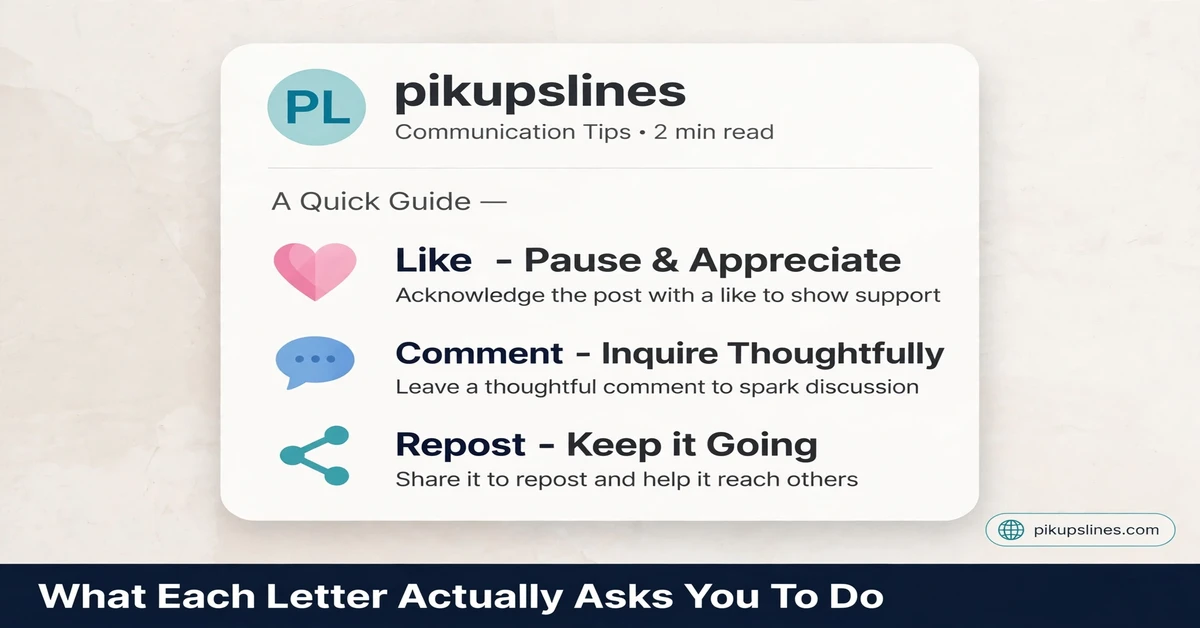
LCR is three small asks packed into three letters, and each one does a different job for the creator.
Like is the lightest ask. A like tells the platform “this post is worth seeing,” and it takes one tap. It is the easiest form of support, and it is also the weakest signal, because it costs the viewer almost nothing.
Comment is a stronger ask. A comment tells the platform “this post started a conversation,” and it takes more effort than a like. Comments also help the creator, because a comment thread keeps people on the post longer, and it gives the creator something to reply to. A short comment like “this helped” counts, but a real comment about the post counts more.
Repost is the strongest ask. A repost tells the platform “this post is worth my name on it,” because the person sharing it puts it in front of their own followers. That is why creators value reposts more than likes: a like stays inside the post, while a repost carries the post to a new audience. On TikTok and Instagram, repost usually means share. On X, it can mean repost or retweet. In a private chat, where there is no public post to share, R is sometimes read as Reply instead, because the message needs an answer, not a share.
When someone writes “LCR please,” they are asking for all three, in that order, from lightest to strongest. You do not have to do all three. Doing one is still support. Doing all three is the full ask.
Why Creators Ask For LCR
Creators ask for LCR because platforms reward engagement with reach. A post with likes, comments, and reposts is more likely to appear in recommendations, on explore pages, and in front of new viewers than a post with views and silence. Engagement is the signal platforms use to decide whether a post deserves a wider audience.
That is also why timing matters. Engagement soon after posting matters more than engagement days later, because platforms test a new post with a small audience first, and then decide whether to show it wider. A creator who asks friends to LCR a new post is trying to pass that first test, not trying to trick anyone. The post still has to hold attention on its own. If people click away after two seconds, no amount of LCR saves it.
Small creators feel this most. A big account can reach people without asking, because it already has an audience. A small creator, a small business, or a fan account often has no audience yet, so a few likes, comments, and reposts from friends are the only way a post gets seen at all. That is why LCR appears most often in small creator communities, fan groups, and engagement groups, where people help each other get seen.
LCR is also a shortcut for a longer ask. “Please like, comment, and repost my post” takes a full sentence. “LCR please” takes two words, and it fits in a caption or a quick message. The shortcut only works because the audience already knows the code.
How LCR Is Used Across Social Media
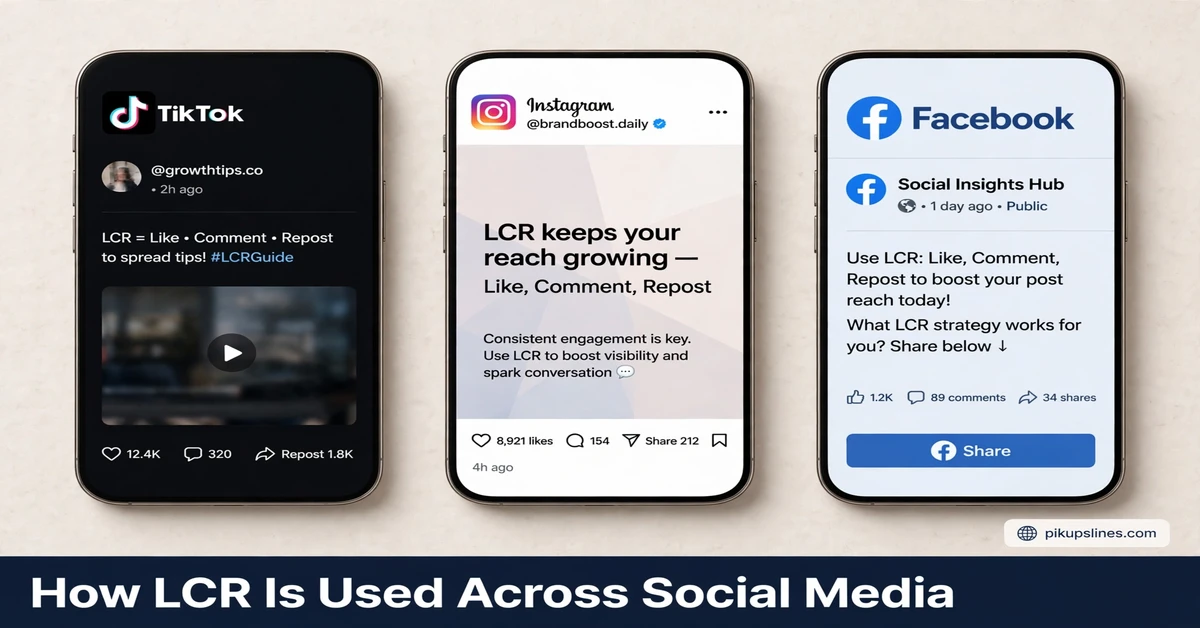
On TikTok, LCR usually appears in captions or comments. “New video up, LCR please.” “LCR if you agree.” The ask is public, and it is aimed at viewers, not just friends. TikTok creators use it because engagement helps a video reach the For You feed, where new viewers find it.
On Instagram, LCR appears in story captions, reel comments, and creator communities. “Please LCR my new reel.” Small creators use it to grow, because a reel with comments and shares is more likely to be recommended than a reel with views alone. On Instagram, R usually means share or repost to a story.
On Facebook, LCR appears in groups, page promotions, and viral posts. “LCR to support.” “LCR this so more fans can see it.” Facebook groups are a natural home for LCR, because group members already share an interest, and a repost inside a group reaches people who care about the topic.
On Snapchat, LCR can mean Like, Comment, and Reply, because Snapchat stories and private chats do not have a public repost in the same way. A creator who says “LCR my story” on Snapchat is usually asking for a reaction and a reply, not a public share. The platform changes the R, but the job stays the same: engage with the post.
On X and Threads, LCR can appear in replies and creator posts, where R means repost. On WhatsApp and in group chats, LCR appears when someone shares a link and asks the group to engage with it. That ask works best when the group already supports each other, as with GNG meaning in text, where a group name signals that the whole group is in it together.
In regular private texting, LCR is rare, because there is usually no public post to engage with. If someone sends “LCR” in a private chat with no post attached, they usually mean “like, comment, and reply to the thing I just sent you,” and the safest reply is to ask which post they mean.
LCR Does Not Guarantee Virality
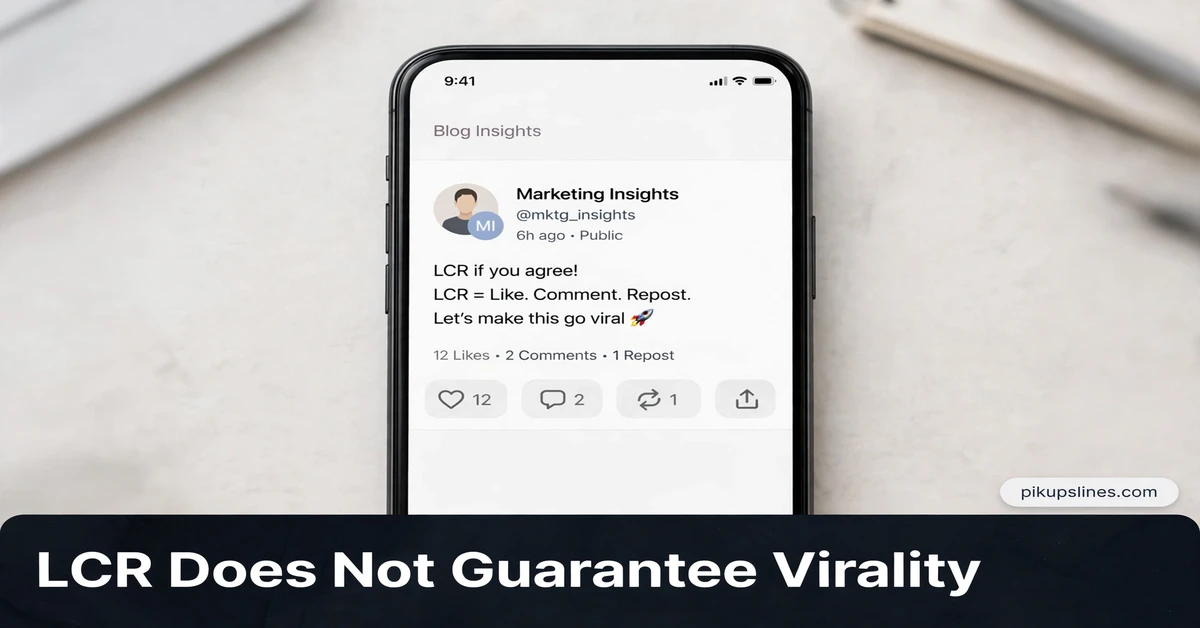
This is the claim competitors underplay, and it matters for anyone thinking about using LCR. Writing LCR under a post does not make it viral. Engagement helps a post reach more people, but it cannot replace a post worth reaching people for.
A post that entertains, teaches, inspires, or solves a problem earns engagement on its own, and LCR only speeds up what the post was already doing. A post that bores people will not go viral because its caption says LCR, because viewers will not like, comment, or repost something they did not enjoy, no matter what the caption asks. The algorithm rewards attention, not requests for attention.
There is also a spam line. One confident ask, as in “LCR if this helped,” feels human. Every post ending in “LCR NOW” feels like begging, and people start ignoring it. LCR-for-LCR loops, where creators engage only in exchange for engagement back, can look like coordinated spam, and they build an audience that engages out of obligation, not interest.
The honest version is this: LCR is a nudge, not a lever. It helps a good post get seen. It does not make a weak post good, and it does not replace the work of making something worth engaging with.
The Other LCR Meanings, Flagged Honestly
LCR has other meanings, but they belong to other topics, and you should not assume them in a social post.
In telecom, LCR can mean Least Cost Routing, choosing the cheapest route for a call. In genetics, LCR can mean Locus Control Region, a part of DNA that controls gene expression. In electronics, LCR can describe a circuit with an inductor, a capacitor, and a resistor. None of these appear in a TikTok caption, and none of them should be used to decode a creator’s post.
One more claim needs flagging. Some low-authority PDF guides say LCR means “Love, Care, Respect” in texting, as an affectionate sign-off. That expansion does not appear in established creator usage, and it does not match how LCR is actually used on TikTok, Instagram, or Facebook, where it is attached to posts and asks for engagement. Treat “Love, Care, Respect” as a weak, unsupported claim, not as an equal alternative.
Do not confuse LCR with LKR either. They share two letters, but they do different jobs: LCR asks for engagement on a post, while LKR meaning in text is a currency code for the Sri Lankan rupee, or a possible typo for IKR. Mixing them up will confuse both a creator and a shopkeeper.
Common Mistakes and Confusions
The first mistake is thinking LCR has only one meaning. On social media, it means Like, Comment, Repost. In telecom, genetics, or electronics, it means something else entirely. The topic decides, not the letters.
The second mistake is thinking LCR is the same as sharing. Sharing is only the R. LCR also asks for a like and a comment, and a post with all three signals more than a post with only shares.
The third mistake is using LCR in a professional email, a formal message, or an academic paper. “LCR my report” sounds strange, because LCR belongs to creator spaces, not work spaces. In a work message, write the full ask: “Please share this post if you found it useful.”
The fourth mistake is begging instead of asking. “PLEASE LCR 50 TIMES” performs worse than “LCR if you enjoyed this,” because begging makes the audience feel used, while a confident ask makes them feel invited. One ask per post is enough.
The fifth mistake is sending a bare “LCR” in a private chat with no post attached. The other person has nothing to like, comment on, or repost, so they have to guess what you mean. Attach the post, or name it: “LCR my new reel, the one about morning routines.”
When Not To Use LCR
Do not use LCR in a professional email, a job application, a formal business message, or an academic paper. The full phrase, or a plain request to share, is clearer and more polished.
Do not use LCR in a serious conversation. A post about a loss, a crisis, or a serious announcement should not end with an engagement ask, because it makes a serious message feel like content. Let people react on their own.
Do not use LCR on every post. If every caption ends with LCR, the ask loses its power, and followers start skipping it. Save it for posts where you genuinely want support, and let other posts stand on their own.
Do not use LCR as a trade. “I will LCR yours if you LCR mine” builds obligation, not audience, and it can look like spam to a platform. Support creators you actually like, and ask for support from people who actually like your work.
Do not use LCR when you have not posted anything. An LCR with no post attached is not an ask, it is a puzzle, and most people will ignore it instead of solving it.
How To Reply To LCR
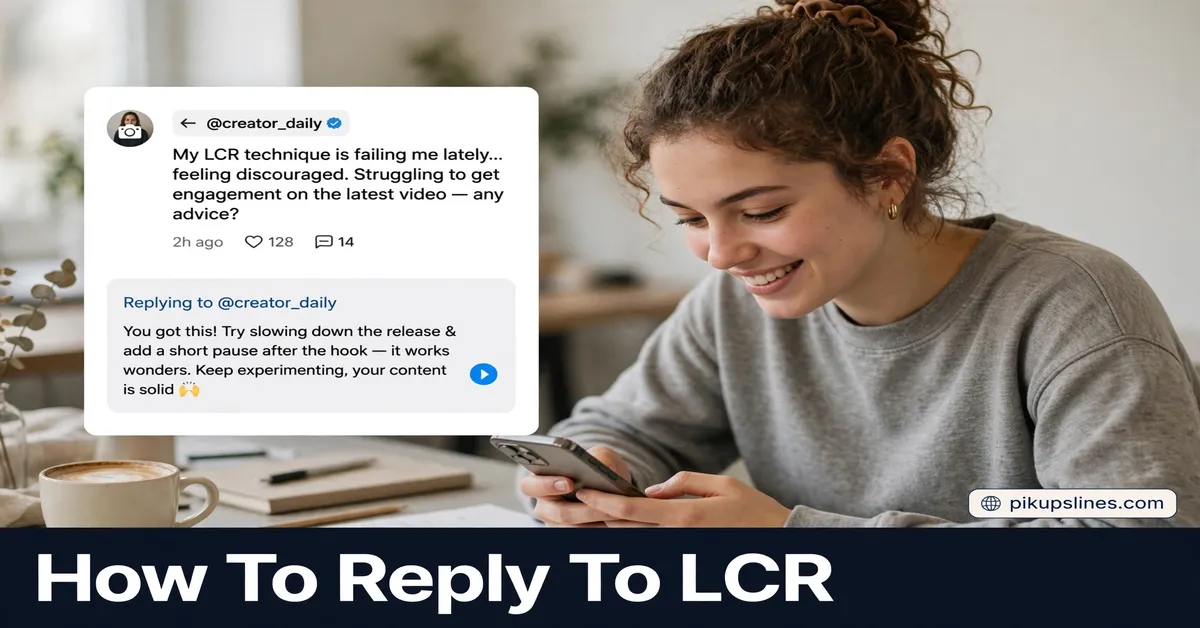
Your reply depends on whether you want to support the post, and how much you want to do.
If you want to support it fully, do all three: like it, leave a real comment, and repost it. A real comment helps more than “nice,” because it gives the creator something to reply to, and it tells the platform the post started a conversation.
If you want to support it lightly, do one or two. “Done.” “Got it.” “Already liked it.” Those are complete replies, and they do not promise more than you did. A short acknowledgment works too, as with IGHT meaning in text, where a brief “ight” keeps a reply warm. “Ight, done.”
If a friend asks in a DM, a friendly reply with a flip works well, as with HBU meaning in text, where a flip hands the question back on the same topic. “Done, hbu, new post up?” pairs support with a question about their own post.
If you do not want to support it, you do not have to reply at all, or you can reply honestly: “Not my thing, but good luck.” No one owes engagement, and a creator who demands it is asking too much.
If you got a bare “LCR” with no post attached, ask which post they mean. “LCR what, the new reel?” That is faster than guessing, and it is better than liking a random old post. A friendly address can soften that question, as with BR meaning in text, where “thanks br, which post?” pairs warmth with a clear question.
Frequently Asked Question
Is LCR a bad thing?
No. LCR is simply an engagement abbreviation. It becomes annoying only if overused or spammed.
What does LCR mean on TikTok?
On TikTok, LCR usually means Like, Comment, Repost, and it is used to encourage interaction with a video so it reaches more viewers.
Is LCR the same as sharing?
Not exactly. Sharing is only one part of LCR. LCR includes liking, commenting, and reposting, so it is broader than just sharing.
Can businesses use LCR?
Yes. Many small brands and creators use LCR to increase visibility and community engagement, especially when they are still growing.
What does LCR mean in text messages?
It means “Like, Comment, and Repost,” or “Reply” in a private chat, as a request for engagement.
Is LCR slang?
Yes, it is internet slang, used mainly on social media by creators and younger audiences.
Is LCR rude or offensive?
No, it is not rude. But overuse can feel annoying or spammy.
How should you reply to LCR?
Reply with “Done,” “Sure,” or “I have already supported you.” If no post was attached, ask which post they mean.
Conclusion
LCR means Like, Comment, Repost, and it is a request for support on a post, with what social media algorithms actually reward as the wider reason the request works at all.
Attach it to a post worth engaging with, ask once and confidently, and let the post do the rest.
Do all three if you want to support a creator fully, do one if you want to support them lightly, and never owe engagement you do not want to give.